Domain herbststimmung.de kaufen?
Wir ziehen mit dem Projekt
herbststimmung.de um.
Sind Sie am Kauf der Domain
herbststimmung.de interessiert?
domain@kv-gmbh.de · 0541-91531010
Domain herbststimmung.de kaufen?
Eignen sich die Feynman Lectures für Physikstudenten?
Ja, die Feynman Lectures eignen sich sehr gut für Physikstudenten. Sie bieten eine umfassende Einführung in die Physik und behandeln verschiedene Themen auf eine anschauliche und verständliche Weise. Die Lectures sind sehr beliebt und werden oft als Ergänzung zu Lehrbüchern verwendet. **
Wann benutzt man im Englischen 'to be supposed to' und wann 'to be expected to'?
Im Englischen benutzt man "to be supposed to", um auszudrücken, was von jemandem erwartet wird oder was er tun sollte, basierend auf Regeln, Vereinbarungen oder Erwartungen. "To be expected to" wird verwendet, um auszudrücken, was wahrscheinlich oder erwartet wird, dass jemand tut, basierend auf der Situation oder den Umständen. Beide Ausdrücke beziehen sich auf Erwartungen, aber "to be supposed to" bezieht sich mehr auf externe Regeln oder Vereinbarungen, während "to be expected to" sich auf allgemeine Erwartungen oder Vorhersagen bezieht. **


Ähnliche Suchbegriffe für Hansebooks-Lectures-Introductory-to
Top-Angebote
Produkte zum Begriff Hansebooks-Lectures-Introductory-to:
-
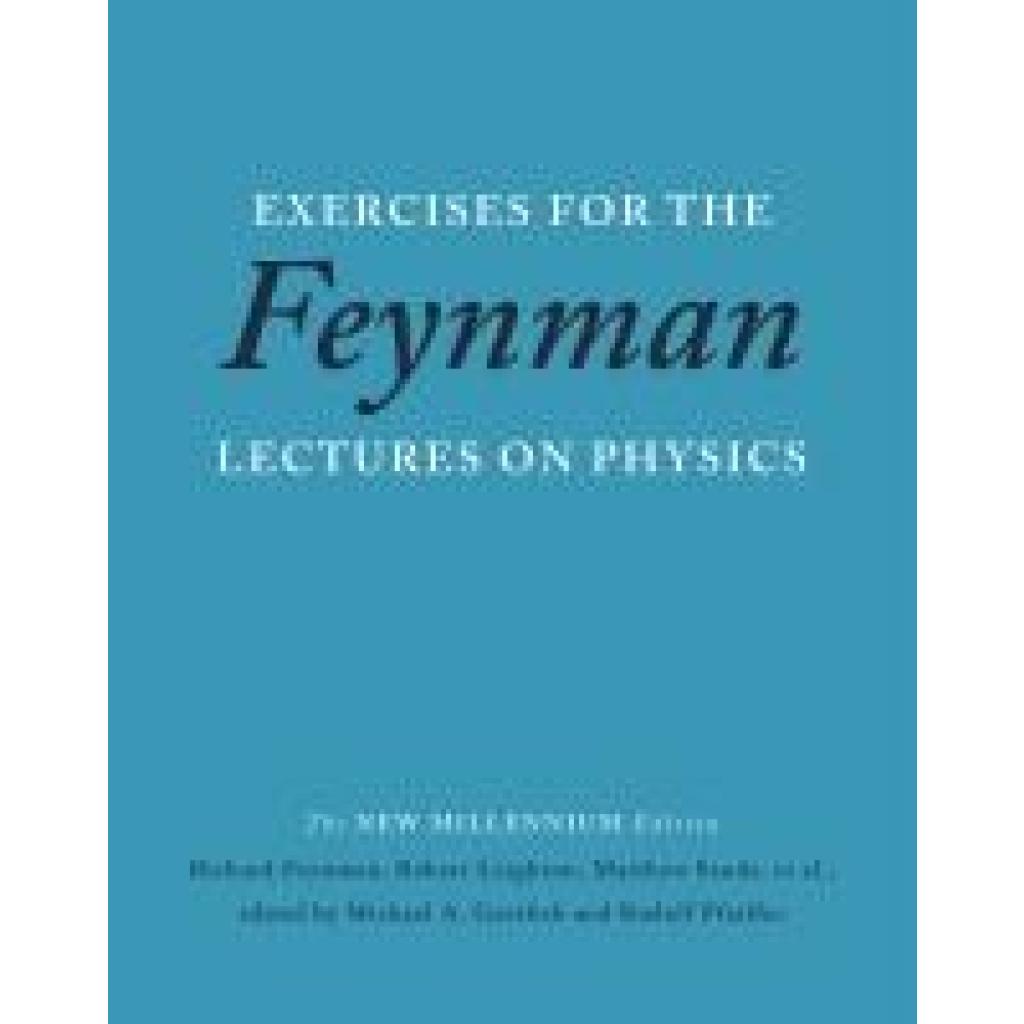
Feynman, Richard: Exercises for the Feynman Lectures on PhysicsExercises for the Feynman Lectures on Physics , Combined into one volume for the first time, the updated and clarified Exercises for the Feynman Lectures on Physics provides comprehensive, hands-on practice in all the most important areas of physics -- from Newtonian mechanics through the theory of relativity and quantum mechanics. A perfect complement to The Feynman Lectures on Physics , these exercises have all been assigned in Caltech's mandatory two-year introductory physics course, either when Richard Feynman was teaching it, or during the nearly two decades that followed when The Feynman Lectures on Physics was used as the textbook. With this modern, easy-to-use volume, students of physics will have a chance to apply what they have learned in the Lectures and to enhance and reinforce the concepts taught by the inimitable Richard Feynman. , > , Erscheinungsjahr: 20140805, Produktform: Kartoniert, Autoren: Sands, Matthew~Feynman, Richard~Leighton, Robert, Redaktion: Gottlieb, Michael A.~Pfeiffer, Rudolf, Seitenzahl/Blattzahl: 320, Themenüberschrift: SCIENCE / Physics / General~SCIENCE / Reference~SCIENCE / Study & Teaching, Fachschema: Physik / Allgemeines, Einführung, Lexikon~Englische Bücher / Naturwissenschaften / Physik, Astronomie~Relativitätstheorie, Fachkategorie: Astronomie, Raum und Zeit~Naturwissenschaften, allgemein~Relativitätstheorie~Fachspezifischer Unterricht, Imprint-Titels: Basic Books, Warengruppe: HC/Physik/Astronomie/Allgemeines, Lexika, Fachkategorie: Nachschlagewerke, Text Sprache: eng, UNSPSC: 49019900, Warenverzeichnis für die Außenhandelsstatistik: 49019900, Verlag: Hachette Book Group USA, Verlag: Hachette Book Group USA, Länge: 274, Breite: 212, Höhe: 17, Gewicht: 728, Produktform: Kartoniert, Genre: Importe, Genre: Importe, Herkunftsland: VEREINIGTE STAATEN VON AMERIKA (US), Katalog: LIB_ENBOOK, Katalog: Gesamtkatalog, Katalog: Internationale Lagertitel, Katalog: internationale Titel, Katalog: Kennzeichnung von Titeln mit einer Relevanz > 30, Katalog: Lagerartikel, Book on Demand, ausgew. Medienartikel, Relevanz: 0250, Tendenz: +1, Unterkatalog: AK, Unterkatalog: Bücher, Unterkatalog: Hardcover, Unterkatalog: Lagerartikel,21,83 €*Versand: 0,00 €Sichere Weiterleitung zum Anbieter
-
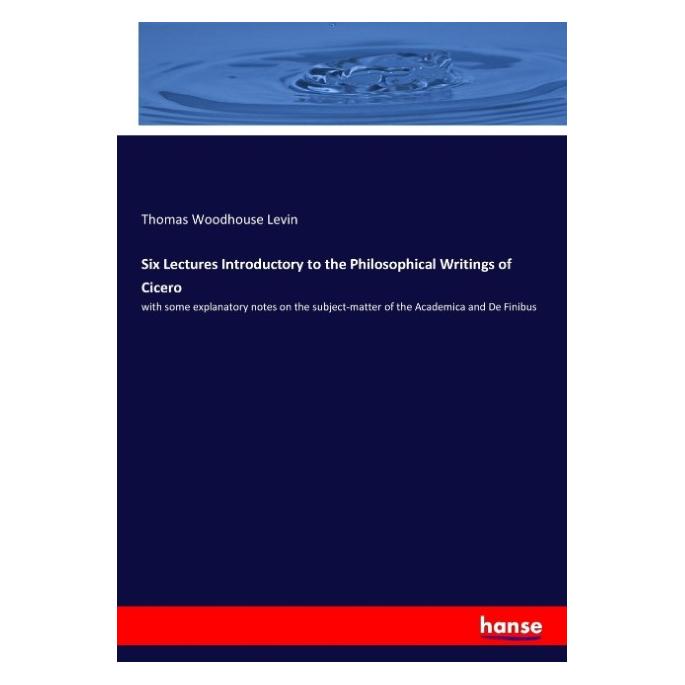
Hansebooks Six Lectures Introductory to the Philosophical Writings of Cicero (Englisch, Softcover, Thomas Woodhouse Levin) (55914926)Hansebooks Six Lectures Introductory to the Philosophical Writings of Cicero (Englisch, Softcover, Thomas Woodhouse Levin) (55914926)18,90 €*Versand: 0,00 €Sichere Weiterleitung zum Anbieter
-
Hansebooks Six Lectures Introductory to the Philosophical Writings of Cicero (Englisch, Softcover, Thomas Woodhouse Levin) (55912212)Hansebooks Six Lectures Introductory to the Philosophical Writings of Cicero (Englisch, Softcover, Thomas Woodhouse Levin) (55912212)18,90 €*Versand: 0,00 €Sichere Weiterleitung zum Anbieter


-
Wie bildet man das Present Progressive bei "to be able to" und "to be allowed to"?
Um das Present Progressive bei "to be able to" zu bilden, verwendet man die entsprechende Form von "to be" (am, is, are) im Present Progressive und fügt dann "able to" hinzu. Zum Beispiel: "I am able to swim" oder "She is able to speak French". Bei "to be allowed to" bildet man das Present Progressive ebenfalls mit der entsprechenden Form von "to be" (am, is, are) im Present Progressive und fügt dann "allowed to" hinzu. Zum Beispiel: "We are allowed to park here" oder "He is allowed to stay out late". **
-
Wann soll ich 'able to', 'allowed to' und 'have to' verwenden?
Du solltest "able to" verwenden, wenn du die Fähigkeit oder Möglichkeit hast, etwas zu tun. "Allowed to" wird benutzt, um zu beschreiben, dass du die Erlaubnis hast, etwas zu tun. "Have to" wird verwendet, um auszudrücken, dass du verpflichtet bist, etwas zu tun, also keine Wahl hast. **
-
Wie lautet die Übersetzung von "Cast your fate to the wind"?
Die Übersetzung von "Cast your fate to the wind" ins Deutsche lautet "Wirf dein Schicksal in den Wind". **
-
Wann benutzt man "not to be supposed to" und wann benutzt man "not to be expected to"?
"not to be supposed to" wird verwendet, um auszudrücken, dass etwas nicht erwartet oder erlaubt ist, basierend auf Regeln, Normen oder Erwartungen. Zum Beispiel: "Kinder sind nicht dazu bestimmt, bis spät in die Nacht aufzubleiben." "not to be expected to" wird verwendet, um auszudrücken, dass etwas nicht erwartet wird, basierend auf den Fähigkeiten oder Möglichkeiten einer Person. Zum Beispiel: "Er ist nicht dazu erwartet, alleine eine komplexe Aufgabe zu lösen." **


Warum wird To Love-Ru To Love-Ru genannt? - Warum wird To Love-Ru als To Love-Ru bezeichnet?
To Love-Ru wird als To Love-Ru bezeichnet, weil dies der Titel des Manga und des Anime ist. Der Name "To Love-Ru" stammt von der Hauptfigur Lala Satalin Deviluke, die aus dem Planeten Deviluke stammt. In der Geschichte geht es um Liebe und Romantik, daher passt der Titel "To Love-Ru" gut zu dem Inhalt der Serie. **
Wann benutzt man im Englischen "need to", "got to" und "have to" für "muss" im Deutschen?
Im Englischen werden "need to", "got to" und "have to" alle verwendet, um "muss" im Deutschen auszudrücken. "Need to" wird verwendet, um eine Notwendigkeit oder Verpflichtung auszudrücken. "Got to" wird umgangssprachlich verwendet, um eine starke Verpflichtung oder Dringlichkeit auszudrücken. "Have to" wird verwendet, um eine allgemeine Verpflichtung oder Notwendigkeit auszudrücken. **
Top-Angebote
Produkte zum Begriff Hansebooks-Lectures-Introductory-to:
-
Feynman, Richard: Exercises for the Feynman Lectures on PhysicsExercises for the Feynman Lectures on Physics , Combined into one volume for the first time, the updated and clarified Exercises for the Feynman Lectures on Physics provides comprehensive, hands-on practice in all the most important areas of physics -- from Newtonian mechanics through the theory of relativity and quantum mechanics. A perfect complement to The Feynman Lectures on Physics , these exercises have all been assigned in Caltech's mandatory two-year introductory physics course, either when Richard Feynman was teaching it, or during the nearly two decades that followed when The Feynman Lectures on Physics was used as the textbook. With this modern, easy-to-use volume, students of physics will have a chance to apply what they have learned in the Lectures and to enhance and reinforce the concepts taught by the inimitable Richard Feynman. , > , Erscheinungsjahr: 20140805, Produktform: Kartoniert, Autoren: Sands, Matthew~Feynman, Richard~Leighton, Robert, Redaktion: Gottlieb, Michael A.~Pfeiffer, Rudolf, Seitenzahl/Blattzahl: 320, Themenüberschrift: SCIENCE / Physics / General~SCIENCE / Reference~SCIENCE / Study & Teaching, Fachschema: Physik / Allgemeines, Einführung, Lexikon~Englische Bücher / Naturwissenschaften / Physik, Astronomie~Relativitätstheorie, Fachkategorie: Astronomie, Raum und Zeit~Naturwissenschaften, allgemein~Relativitätstheorie~Fachspezifischer Unterricht, Imprint-Titels: Basic Books, Warengruppe: HC/Physik/Astronomie/Allgemeines, Lexika, Fachkategorie: Nachschlagewerke, Text Sprache: eng, UNSPSC: 49019900, Warenverzeichnis für die Außenhandelsstatistik: 49019900, Verlag: Hachette Book Group USA, Verlag: Hachette Book Group USA, Länge: 274, Breite: 212, Höhe: 17, Gewicht: 728, Produktform: Kartoniert, Genre: Importe, Genre: Importe, Herkunftsland: VEREINIGTE STAATEN VON AMERIKA (US), Katalog: LIB_ENBOOK, Katalog: Gesamtkatalog, Katalog: Internationale Lagertitel, Katalog: internationale Titel, Katalog: Kennzeichnung von Titeln mit einer Relevanz > 30, Katalog: Lagerartikel, Book on Demand, ausgew. Medienartikel, Relevanz: 0250, Tendenz: +1, Unterkatalog: AK, Unterkatalog: Bücher, Unterkatalog: Hardcover, Unterkatalog: Lagerartikel,21,83 €*Versand: 0,00 €Sichere Weiterleitung zum Anbieter
-
Eignen sich die Feynman Lectures für Physikstudenten?
Ja, die Feynman Lectures eignen sich sehr gut für Physikstudenten. Sie bieten eine umfassende Einführung in die Physik und behandeln verschiedene Themen auf eine anschauliche und verständliche Weise. Die Lectures sind sehr beliebt und werden oft als Ergänzung zu Lehrbüchern verwendet. **
-
Wann benutzt man im Englischen 'to be supposed to' und wann 'to be expected to'?
Im Englischen benutzt man "to be supposed to", um auszudrücken, was von jemandem erwartet wird oder was er tun sollte, basierend auf Regeln, Vereinbarungen oder Erwartungen. "To be expected to" wird verwendet, um auszudrücken, was wahrscheinlich oder erwartet wird, dass jemand tut, basierend auf der Situation oder den Umständen. Beide Ausdrücke beziehen sich auf Erwartungen, aber "to be supposed to" bezieht sich mehr auf externe Regeln oder Vereinbarungen, während "to be expected to" sich auf allgemeine Erwartungen oder Vorhersagen bezieht. **
-
Wie bildet man das Present Progressive bei "to be able to" und "to be allowed to"?
Um das Present Progressive bei "to be able to" zu bilden, verwendet man die entsprechende Form von "to be" (am, is, are) im Present Progressive und fügt dann "able to" hinzu. Zum Beispiel: "I am able to swim" oder "She is able to speak French". Bei "to be allowed to" bildet man das Present Progressive ebenfalls mit der entsprechenden Form von "to be" (am, is, are) im Present Progressive und fügt dann "allowed to" hinzu. Zum Beispiel: "We are allowed to park here" oder "He is allowed to stay out late". **
-
Wann soll ich 'able to', 'allowed to' und 'have to' verwenden?
Du solltest "able to" verwenden, wenn du die Fähigkeit oder Möglichkeit hast, etwas zu tun. "Allowed to" wird benutzt, um zu beschreiben, dass du die Erlaubnis hast, etwas zu tun. "Have to" wird verwendet, um auszudrücken, dass du verpflichtet bist, etwas zu tun, also keine Wahl hast. **
Ähnliche Suchbegriffe für Hansebooks-Lectures-Introductory-to
-
Hansebooks Six Lectures Introductory to the Philosophical Writings of Cicero (Englisch, Softcover, Thomas Woodhouse Levin) (55914926)Hansebooks Six Lectures Introductory to the Philosophical Writings of Cicero (Englisch, Softcover, Thomas Woodhouse Levin) (55914926)18,90 €*Versand: 0,00 €Sichere Weiterleitung zum Anbieter
-
Hansebooks Six Lectures Introductory to the Philosophical Writings of Cicero (Englisch, Softcover, Thomas Woodhouse Levin) (55912212)Hansebooks Six Lectures Introductory to the Philosophical Writings of Cicero (Englisch, Softcover, Thomas Woodhouse Levin) (55912212)18,90 €*Versand: 0,00 €Sichere Weiterleitung zum Anbieter
-
Hansebooks Lectures Introductory to the Study of the Epistles of Paul the Apostle (Englisch, Softcover, William Kelly) (56048161)Hansebooks Lectures Introductory to the Study of the Epistles of Paul the Apostle (Englisch, Softcover, William Kelly) (56048161)36,90 €*Versand: 0,00 €Sichere Weiterleitung zum Anbieter
-
Wie lautet die Übersetzung von "Cast your fate to the wind"?
Die Übersetzung von "Cast your fate to the wind" ins Deutsche lautet "Wirf dein Schicksal in den Wind". **
-
Wann benutzt man "not to be supposed to" und wann benutzt man "not to be expected to"?
"not to be supposed to" wird verwendet, um auszudrücken, dass etwas nicht erwartet oder erlaubt ist, basierend auf Regeln, Normen oder Erwartungen. Zum Beispiel: "Kinder sind nicht dazu bestimmt, bis spät in die Nacht aufzubleiben." "not to be expected to" wird verwendet, um auszudrücken, dass etwas nicht erwartet wird, basierend auf den Fähigkeiten oder Möglichkeiten einer Person. Zum Beispiel: "Er ist nicht dazu erwartet, alleine eine komplexe Aufgabe zu lösen." **
-
Warum wird To Love-Ru To Love-Ru genannt? - Warum wird To Love-Ru als To Love-Ru bezeichnet?
To Love-Ru wird als To Love-Ru bezeichnet, weil dies der Titel des Manga und des Anime ist. Der Name "To Love-Ru" stammt von der Hauptfigur Lala Satalin Deviluke, die aus dem Planeten Deviluke stammt. In der Geschichte geht es um Liebe und Romantik, daher passt der Titel "To Love-Ru" gut zu dem Inhalt der Serie. **
-
Wann benutzt man im Englischen "need to", "got to" und "have to" für "muss" im Deutschen?
Im Englischen werden "need to", "got to" und "have to" alle verwendet, um "muss" im Deutschen auszudrücken. "Need to" wird verwendet, um eine Notwendigkeit oder Verpflichtung auszudrücken. "Got to" wird umgangssprachlich verwendet, um eine starke Verpflichtung oder Dringlichkeit auszudrücken. "Have to" wird verwendet, um eine allgemeine Verpflichtung oder Notwendigkeit auszudrücken. **
* Alle Preise verstehen sich inklusive der gesetzlichen Mehrwertsteuer und ggf. zuzüglich Versandkosten. Die Angebotsinformationen basieren auf den Angaben des jeweiligen Shops und werden über automatisierte Prozesse aktualisiert. Eine Aktualisierung in Echtzeit findet nicht statt, so dass es im Einzelfall zu Abweichungen kommen kann. ** Hinweis: Teile dieses Inhalts wurden von KI erstellt.